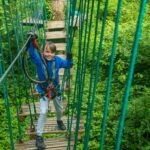
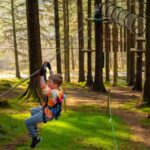
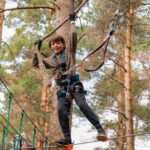
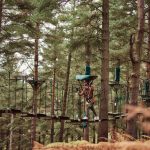
ZipIt operates high ropes courses at four forest locations across Ireland. All courses use continuous belay safety systems, trained staff supervise every session, and equipment is regularly inspected. This guide answers the safety questions parents actually ask before booking.
Your child wants to do it. Their friends have done it. The photos look exciting. But also: the photos show children forty feet up in trees, walking across ropes, flying through the air on ziplines.
The parent brain does what parent brains do. It imagines everything that could go wrong.
This guide addresses those concerns directly. Not with marketing language about how fun it is, but with specific information about how the safety systems work and what the actual risks are.
The Continuous Belay System
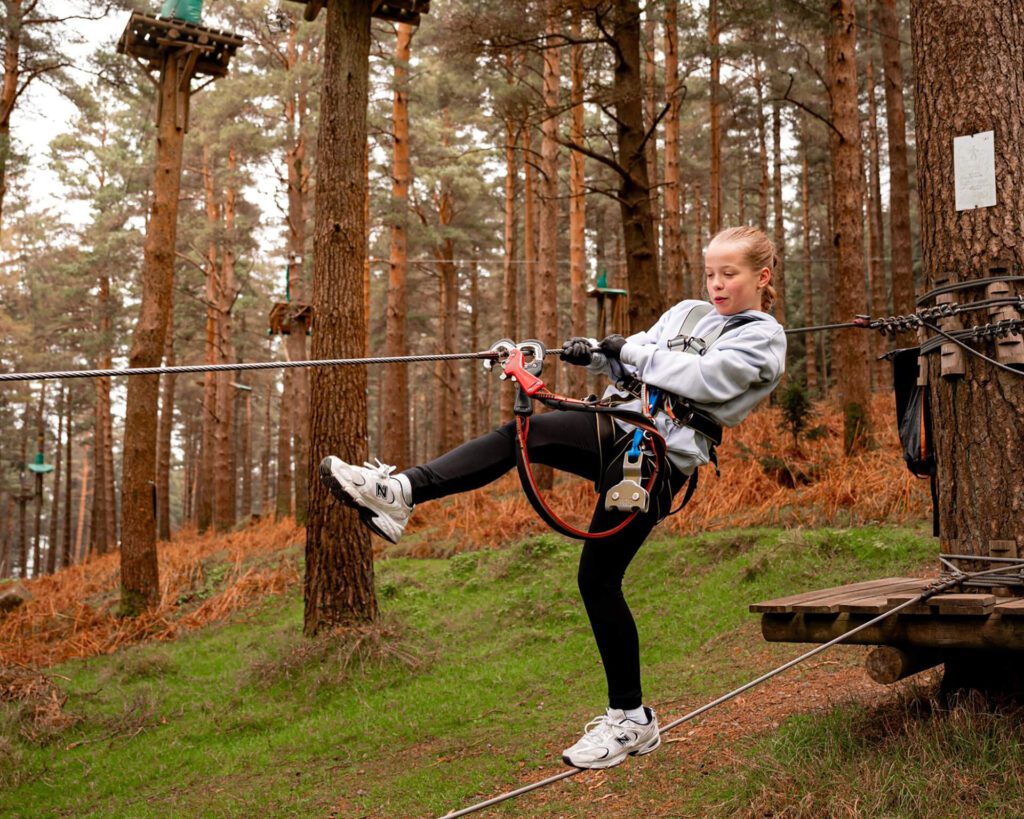
This is the most important safety feature. Understanding it helps.
How it works:
Every participant wears a harness with two attachment points. These clip onto a safety line that runs through the entire course. The attachment is mechanical, not relying on participants to clip and unclip themselves.
The critical point: you cannot unclip from the safety line until you return to ground level. The system is designed so that human error cannot defeat it.
What this means:
If a child slips, falls, lets go, freezes, panics, or makes any other mistake, they cannot fall to the ground. The harness catches them. They hang in the air, safe but possibly embarrassed, until they recover or staff help them.
The system removes the most serious risk, falling from height, from the equation entirely.
Staff Training and Supervision
The equipment matters. So do the people operating it.
Staff qualifications:
ZipIt instructors are trained in high ropes operations, safety procedures, and emergency response. They know how to fit equipment correctly, how to monitor participants, and how to intervene when needed.
Supervision during sessions:
Staff observe from ground level throughout every session. They watch for:
- Equipment issues
- Participants who are stuck or struggling
- Signs of distress or panic
- Weather changes that might affect safety
They are not passive observers. They actively monitor and intervene when necessary.
Staff-to-participant ratios:
Ratios ensure adequate supervision for group sizes. Larger groups have more staff. The numbers vary by session type but are set to maintain safety standards.
Equipment Inspection
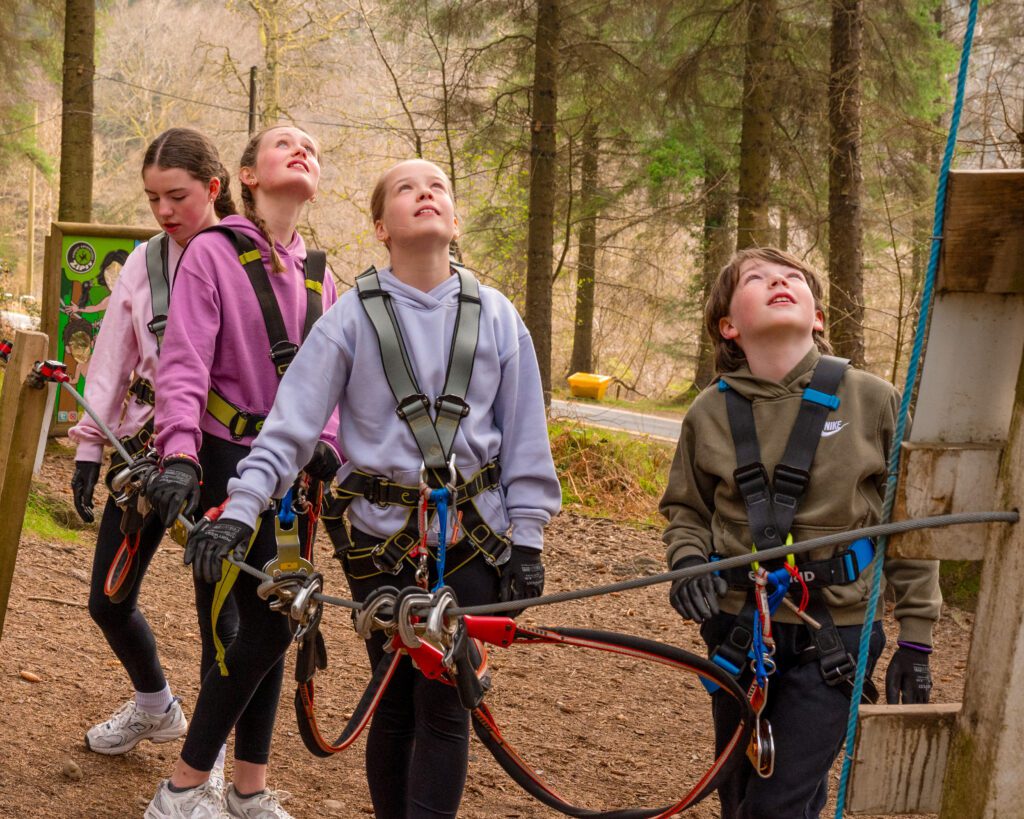
The equipment that keeps participants safe requires maintenance.
Regular inspection:
Equipment is inspected before sessions and undergoes more thorough checks on a scheduled basis. This includes:
- Harnesses and attachment points
- Safety lines and connection hardware
- Platforms and structural elements
- Zipline cables and braking systems
Replacement schedules:
Equipment has defined lifespans. Items are replaced based on use, age, and inspection findings, not just when they fail.
Industry standards:
Adventure parks operate under industry guidelines and regulations. Equipment and procedures meet these standards.
What Happens If Someone Gets Stuck
It happens. A child freezes mid-crossing, unable to go forward or back. The brain locks up. The body will not move.
The safety situation:
They are clipped in. They cannot fall. They are uncomfortable and scared, but safe.
What staff do:
- Observe that someone is stuck
- Approach calmly (from ground level or adjacent platform depending on situation)
- Talk to the participant, reassuring them
- Guide them through completing the section, step by step
- If they cannot continue, help them return to a platform or come down
How often it happens:
Occasionally. Not every session, but regularly enough that staff are experienced in handling it. It is a normal part of adventure park operations, not an emergency.
Emotional impact:
Most children who get stuck feel embarrassed rather than traumatised. Many complete the rest of the course successfully after staff help. Some decide to stop early, which is also fine.
What Happens If Someone Falls
Falls from the course to the ground do not happen. The continuous belay system prevents this.
What can happen: someone slips off a crossing and hangs in their harness.
The experience:
Briefly disorienting. The harness catches them. They dangle until they regain their footing or staff help. It can be uncomfortable and scary in the moment but does not cause injury.
Staff response:
Staff observe the situation and help the participant recover. This is routine, not emergency response.
Parental concern vs actual risk:
Parents imagine catastrophic falls. The reality is controlled hanging followed by recovery. The gap between imagination and reality is large.
Physical Risks That Do Exist
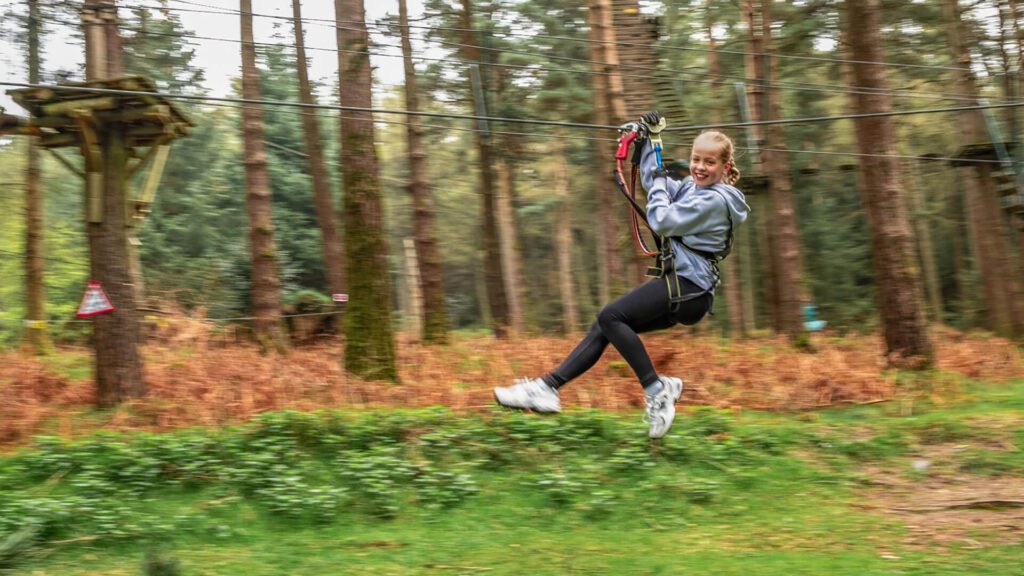
Honesty requires acknowledging that high ropes courses are physical activities with some risk.
Minor scrapes and bruises:
Rope rub, contact with platforms or equipment, minor impacts. These happen occasionally. They are the normal minor injuries of physical activity, similar to playground bumps.
Muscle fatigue and strain:
Three hours of climbing is physically demanding. Some participants, especially those unused to exercise, may experience muscle soreness afterwards. This is not injury, just exertion.
Anxiety and fear:
Not physical injury, but real. Some participants find the experience more stressful than enjoyable. Heights can be genuinely frightening. This is not danger but is worth considering.
Medical conditions:
Certain conditions affect participation. Heart conditions, pregnancy, conditions affected by physical exertion or magnetic fields (the safety system uses magnets at some locations). These restrictions exist for safety reasons.
Age and Size Requirements
Requirements exist for safety, not arbitrarily.
Minimum age (standard courses): 7 years old
This is based on harness fit and physical development. Younger children cannot be safely secured in standard equipment.
Minimum age (junior courses at Djouce Park): 3 years old
Djouce Park has courses designed for younger children with appropriate equipment.
Height and weight limits:
Minimums and maximums apply. Too small and harnesses do not fit securely. Too heavy and equipment limits are exceeded. These limits are checked at fitting.
Why requirements matter:
A harness that does not fit properly is not safe. Equipment has rated capacities. Requirements ensure the safety systems work as designed.
Comparing Risks
Context helps with risk assessment.
Compared to other children’s activities:
High ropes courses with continuous belay systems are statistically very safe. The controlled environment, constant supervision, and failsafe equipment create lower injury rates than many common activities: team sports, cycling, playground equipment.
Compared to older adventure activities:
Modern systems are significantly safer than the climbing walls, rope courses, and adventure activities of previous decades. Continuous belay was specifically developed to eliminate the most common sources of accidents.
Compared to doing nothing:
Children benefit from physical challenge, outdoor activity, and managed risk. The alternative, avoiding all activities with any risk, has its own costs.
Questions Parents Ask
Staff are trained to help panicked participants. The child remains safe while panicked because they are clipped in. Most calm down with support. Some choose to stop, which is fine.
Equipment is inspected regularly and designed with redundancy. Failures are extremely rare. The continuous belay system means that even a single component failure does not result in a fall.
Staff supervision is the core of the operation, not an afterthought. Multiple staff observe each session. Procedures ensure consistent attention.
The continuous belay system is designed for this. Children cannot unclip themselves. Not following instructions may lead to getting stuck or needing help, but not to falling.
Staff are first aid trained. Emergency procedures exist. The locations are accessible to emergency services if needed.
Schools and Parties
For group bookings, the same safety systems apply. Schools receive documentation for risk assessments. Party groups have the same supervision as any other session.
Making Your Decision
Safety information helps, but only you can decide.
Consider:
- Your child’s temperament (do they handle fear well or poorly?)
- Your own comfort level with managed risk
- The specific requirements and restrictions
- Whether your child actually wants to do this
Remember:
- The safety systems are designed to eliminate serious injury risk
- Staff are trained and attentive
- Getting stuck or scared is possible but not dangerous
- Most children have positive experiences
If unsure: Contact the team with specific questions. Discuss any medical conditions or concerns. Make an informed decision rather than one based on vague worry.
Book When Ready
When you have decided, book online. Choose your location, select your date, and prepare your child for an adventure that is exciting precisely because it feels challenging, while remaining genuinely safe.