ZipIt operates high ropes courses at four forest locations across Ireland. Many visitors arrive nervous about heights but complete the courses successfully. This guide covers what actually helps with fear, what to expect if you are anxious, and how to support nervous children or adults in your group.
You want to do it. Or someone you care about wants to do it. But there is a problem: heights are terrifying.
The photos show people forty feet up, walking across wobbly ropes, launching into space on ziplines. Your stomach turns just looking at them. The idea of actually being up there feels impossible.
Here is the truth: many people who are scared of heights do ZipIt anyway. Some love it. Some endure it. Some stop partway through. All of these are acceptable outcomes.
This guide is for nervous visitors and the people who accompany them. What actually helps. What makes things worse. What happens if fear wins.
Understanding the Fear
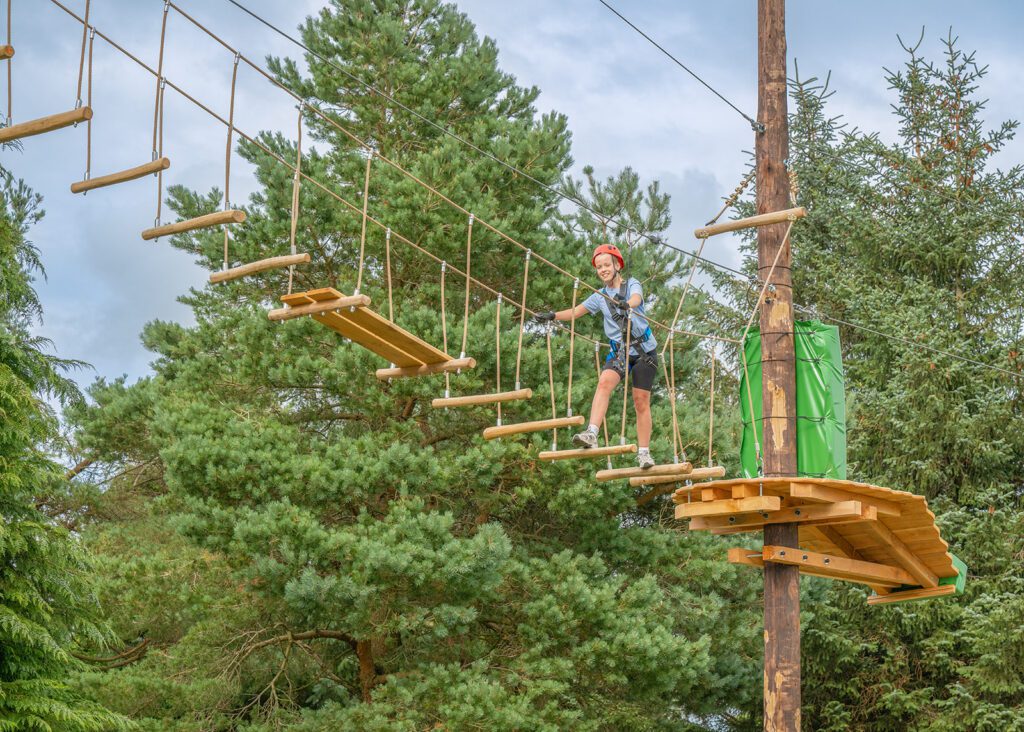
Fear of heights is not a character flaw. It is a survival instinct.
Humans evolved to be cautious around drops. Those who were not cautious fell off things and did not reproduce. Your brain is doing exactly what millions of years of evolution designed it to do: keeping you away from edges.
The problem: high ropes courses are entirely edges. The rational knowledge that you are clipped into a safety system does not automatically override the instinct that screams danger.
This is why people can be genuinely terrified on a platform they know is safe. The conscious mind understands the harness. The unconscious mind sees the ground forty feet below and wants to leave immediately.
What Fear Feels Like on the Courses
Knowing what to expect helps some people prepare.
Before starting:
Anxiety during the safety briefing. Looking at the courses and imagining the worst. Heart rate increasing. Thoughts about backing out. This is usually the peak of fear, before you have any evidence about how you will actually cope.
Getting harnessed:
The equipment makes it real. Some people feel more scared. Others feel reassured by the tangible safety system.
First platform:
The hardest moment for most nervous people. Leaving solid ground. The harness taking weight for the first time. Looking down and seeing height.
First section:
Pure focus. Fear is still present but attention narrows to the immediate task. Where to put feet. Where to hold. What comes next.
After the first section:
Relief. Evidence that survival is possible. Fear often reduces significantly at this point because the unknown has become known.
Mid-course:
Many nervous people find they are no longer thinking about fear. They are thinking about the crossing in front of them. Flow states are possible even for anxious participants.
End of course:
Pride. The gap between expected fear and actual accomplishment creates strong positive feelings. Nervous people often have better emotional experiences than confident ones, because they overcame something.
What Actually Helps
Based on how nervous visitors typically cope:
Understanding the safety system:
The continuous belay means you cannot fall. You are clipped in throughout. Even if you slip, freeze, or let go completely, you hang in your harness rather than falling. Understanding this intellectually does not eliminate fear, but it helps manage it.
Starting with easier sections:
The courses are graded. Beginners sections are lower and less challenging. Build confidence there before attempting harder routes. There is no requirement to do advanced sections.
Moving at your own pace:
Nobody times you. Take as long as you need on each section. Rest on platforms. There is no rush.
Focusing on the immediate task:
Do not look at the entire course and think about all of it. Look at the next three feet. Where does your hand go? Where does your foot go? Small focus prevents overwhelming fear.
Accepting the fear:
Fighting fear makes it worse. Accepting that you are scared, and doing the thing anyway, is more effective. The goal is not to stop being scared. The goal is to do the course while scared.
Having support:
A friend or family member on the course can help. Someone to talk to on platforms. Someone to encourage you across tricky sections. Someone to distract you from your own head.
Committing to trying:
Nervous people who decide in advance that they will attempt the first section usually do better than those who leave the option open to back out. The decision removes one source of mental conflict.
What Does Not Help

Some common approaches that backfire:
Pretending you are not scared:
Suppressing fear takes energy and rarely works. Better to acknowledge the fear and proceed despite it.
Looking down repeatedly:
Once is enough to know the height. After that, looking down just triggers more fear responses. Look at the next platform, not the ground.
Negative self-talk:
“I can’t do this” becomes self-fulfilling. “I am scared and I am doing it anyway” is more useful.
Too much reassurance:
Constantly asking for reassurance keeps attention on the fear. Sometimes the best support is distraction rather than repeated comfort.
Comparing to others:
The confident twelve-year-old racing ahead is irrelevant to your experience. Your course, your pace, your achievement.
Forcing it:
If fear becomes overwhelming, stopping is acceptable. Forcing continuation when someone is genuinely panicked does not help.
Supporting a Nervous Child
Children experience fear differently. How to help:
Before the day:
Talk about what will happen. Show photos or videos if helpful. Normalise that some parts might feel scary. Avoid both dismissing fears (“it’s fine, don’t worry”) and amplifying them (“it is quite high but you’ll probably be okay”).
At the briefing:
Pay attention so you can remind them of key information. Let them ask questions. Notice if they are withdrawing or becoming very quiet.
On the courses:
Stay close if possible. Offer encouragement without pressure. Let them set the pace. Celebrate small achievements without excessive fuss.
If they freeze:
Stay calm. Do not shout instructions from ground level. Let staff handle it. They are trained for this.
If they want to stop:
Accept it without drama. “Okay, let’s get you down” is better than “just try one more section.” There is no failure in stopping.
Afterwards:
Focus on what they did accomplish, not what they did not. Even getting harnessed and attempting the first platform is an achievement for a scared child.
Supporting a Nervous Adult
Adults have different needs:
Respect autonomy:
Adults make their own decisions. Encouragement is good. Pressure is counterproductive.
Avoid condescension:
Fear of heights is not childish. Treating an anxious adult like a nervous toddler makes things worse.
Offer practical support:
“Would it help if I went first?” is better than “you’ll be fine.”
Give space:
Some adults prefer to work through fear privately. Constant attention can feel embarrassing.
Normalise the experience:
Many adults are nervous. This is common. They are not unusual or weak.
What Staff Do
ZipIt staff see nervous visitors constantly. They know what works.
They watch for signs:
Body language, hesitation, withdrawal. They notice who is struggling before intervention is needed.
They offer calm support:
Talking people through sections step by step. Giving permission to take time. Never rushing.
They do not force:
Nobody is made to continue. If someone wants to come down, staff help them down.
They have techniques:
Distraction, incremental challenges, physical guidance. They know how to help people who are stuck.
What Happens If You Cannot Continue
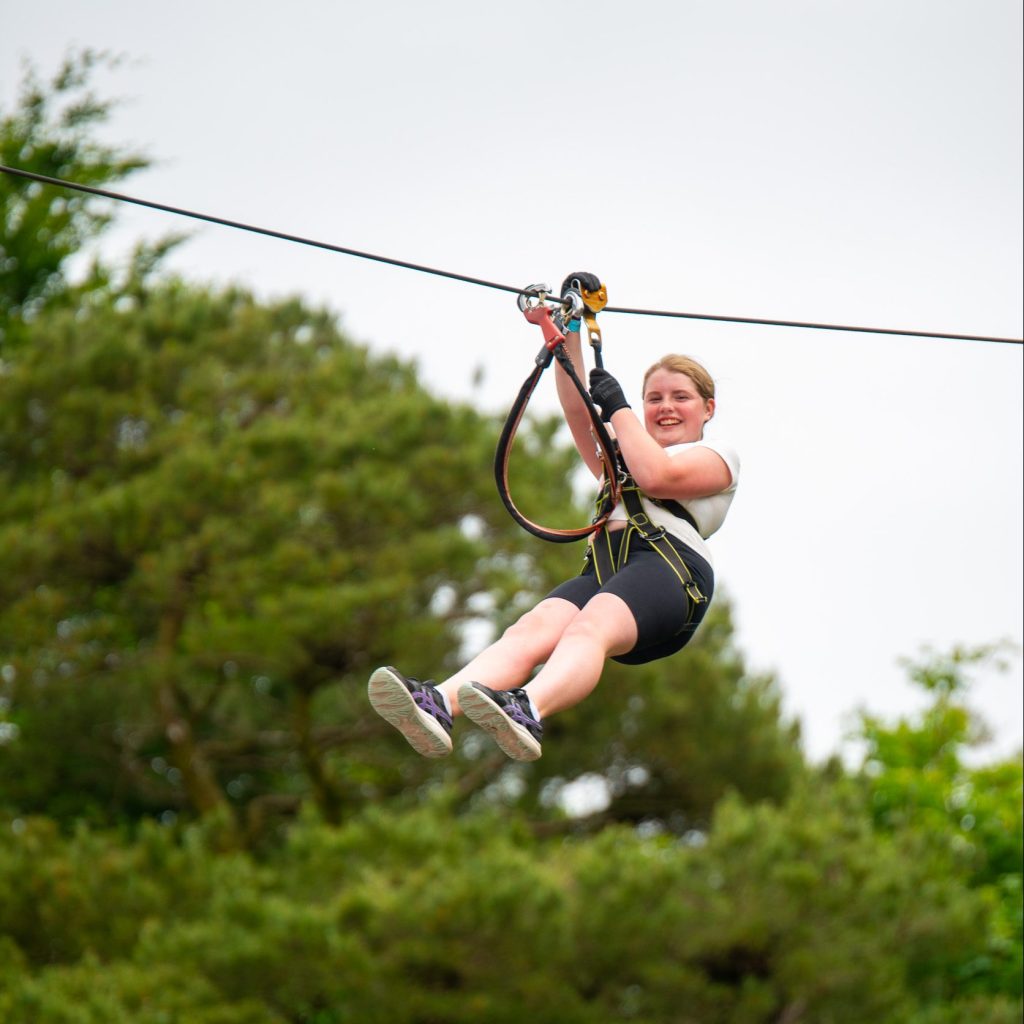
Sometimes fear wins. This is acceptable.
The process:
You tell staff you want to stop. They help you to a platform with access to ground level. You come down. No drama.
How it feels:
Disappointment, possibly. Relief, definitely. Sometimes shame, though there is no need for it. Stopping when something is too much is rational, not failure.
What others think:
Less than you imagine. Most people are focused on their own experience, not judging yours.
Trying again:
Some people who stop partway return another day and complete the course. First attempts break the unknown. Second attempts often go better.
Choosing Your Location
The four ZipIt locations have similar courses, but some considerations for nervous visitors:
Tibradden Wood: Dublin Mountains setting. Views across Dublin and bay from higher platforms. For some, the view helps; for others, seeing the city far below emphasises height.
Farran Park: Lee Valley woodland. Enclosed forest setting may feel less exposed than mountain locations.
Djouce Park: County Wicklow. Has junior courses for younger nervous children (ages 3+). The junior courses are lower, which may suit very anxious older children too, though they are designed for physical size rather than fear level.
Lough Key: Mature woodland. The tree cover may provide a more enclosed feeling than open canopy locations.
None of these differences dramatically change the experience for nervous visitors. All locations have graded courses, supportive staff, and the same safety systems.
Frequently Asked Questions
Maybe. If you want to challenge yourself and can accept both success and not-success as outcomes, it is worth attempting. If the very idea causes distress, it may not be enjoyable.
Possibly, temporarily. Exposure can reduce fear in the moment. Whether it creates lasting change depends on many factors. Do not expect a cure.
You stay clipped in and safe. Staff help you continue or come down. It is not an emergency, just a pause.
It happens. Height fear triggers strong responses. Nobody judges. Staff have seen it before.
Panic passes. The safety system keeps you secure while it passes. Staff help you through or help you down.
Yes. It helps them watch for you and provide appropriate support.
Book When You Are Ready
If you have decided to try despite the fear, book online. Check pricing for rates. Choose a date, prepare yourself mentally, and see what happens. Many nervous visitors surprise themselves.