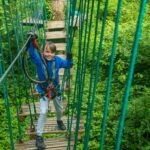
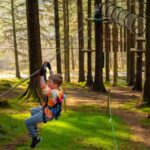
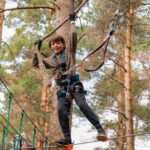
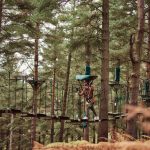
ZipIt operates high ropes and zipline courses at four forest locations across Ireland: Tibradden Wood (Dublin), Farran Park (Cork), Djouce Park (Wicklow), and Lough Key (Roscommon). Sessions run approximately three hours for ages 7 and up, with all equipment provided. This guide covers everything first-time visitors need to know.
You have booked. The date is set. Now you are wondering what actually happens.
High ropes courses are unfamiliar to most people. The concept makes sense: climbing, balancing, ziplining through trees. But the details matter. What do you wear? What happens when you arrive? How does the safety equipment work? What if you get stuck? What if you are scared?
This guide answers those questions. Read it before your visit so there are no surprises on the day.
Before You Go
Book in advance. ZipIt requires booking. You cannot just turn up. Popular times fill quickly, especially weekends and school holidays. Book online and arrive with your confirmation.
Check your location. ZipIt has four sites:
- Tibradden Wood, Dublin Mountains (30 minutes from city centre)
- Farran Park, Lee Valley, Cork (20 minutes from city)
- Djouce Park, County Wicklow (45 minutes from Dublin)
- Lough Key, Roscommon (2 hours from Dublin, 90 minutes from Galway)
Make sure you know which one you are going to. They are in different parts of the country.
Check the requirements. Minimum age is 7 for standard courses (3 for junior course at Djouce Park). Height and weight limits apply. Certain medical conditions affect participation. If unsure, contact the team before booking.
What to Wear
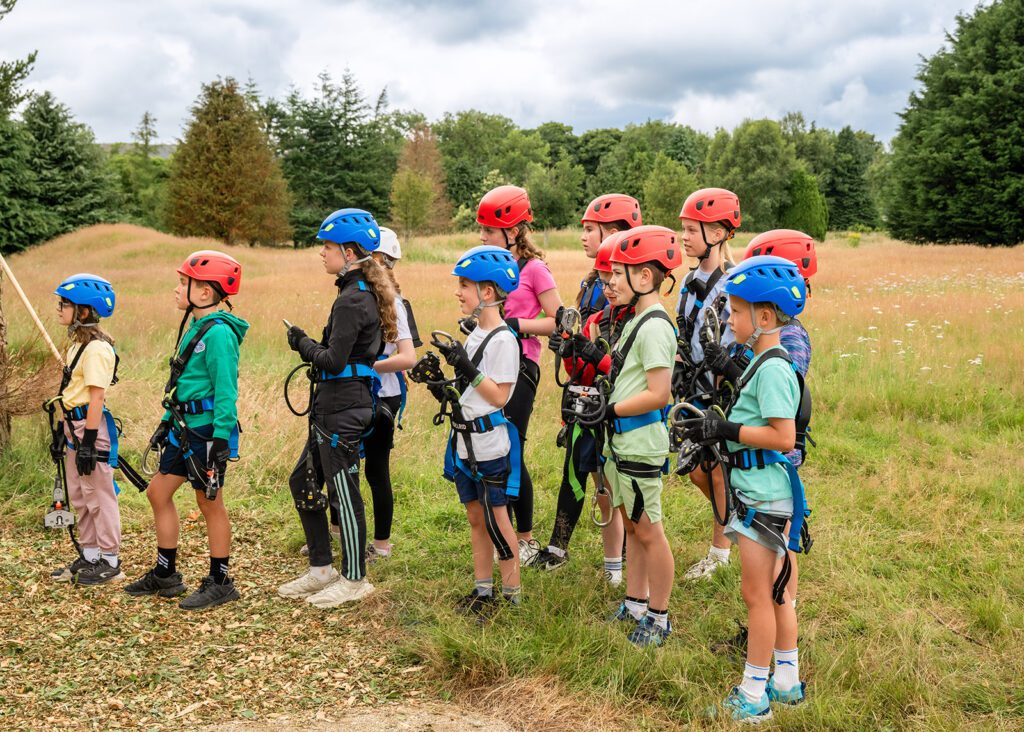
This matters more than people expect. Wrong clothing creates problems.
Clothes:
- Outdoor clothes you can move in
- Layers work well (you warm up once moving but can cool down between sections)
- Nothing too loose or baggy (can catch on equipment)
- Long sleeves optional but provide some protection from rope rub
Shoes:
- Closed-toe shoes with grip
- Trainers work fine
- Hiking boots work better
- No sandals, no flip-flops, no heels, no ballet pumps, no smooth-soled fashion shoes
Footwear is the most common problem. People arrive in inappropriate shoes and cannot participate. Take this seriously.
What not to wear:
- Skirts or dresses (harness goes around legs)
- Dangling jewellery (catches on equipment)
- Scarves or loose accessories
- Anything you would mind getting dirty
What to Bring
Essential:
- Your booking confirmation
- Appropriate clothing (worn, not carried)
- Appropriate shoes (worn, not carried)
- Water bottle
- Hair tie if you have long hair (it gets tangled in equipment otherwise)
Recommended:
- Waterproof jacket if rain is forecast
- Sunscreen in summer
- Small snack for afterwards (you will be hungry)
Leave behind:
- Phones and valuables (cannot be taken on the courses; they fall from pockets)
- Anything you would mind losing or damaging
- Large bags (nowhere convenient to store them)
Arriving at the Park
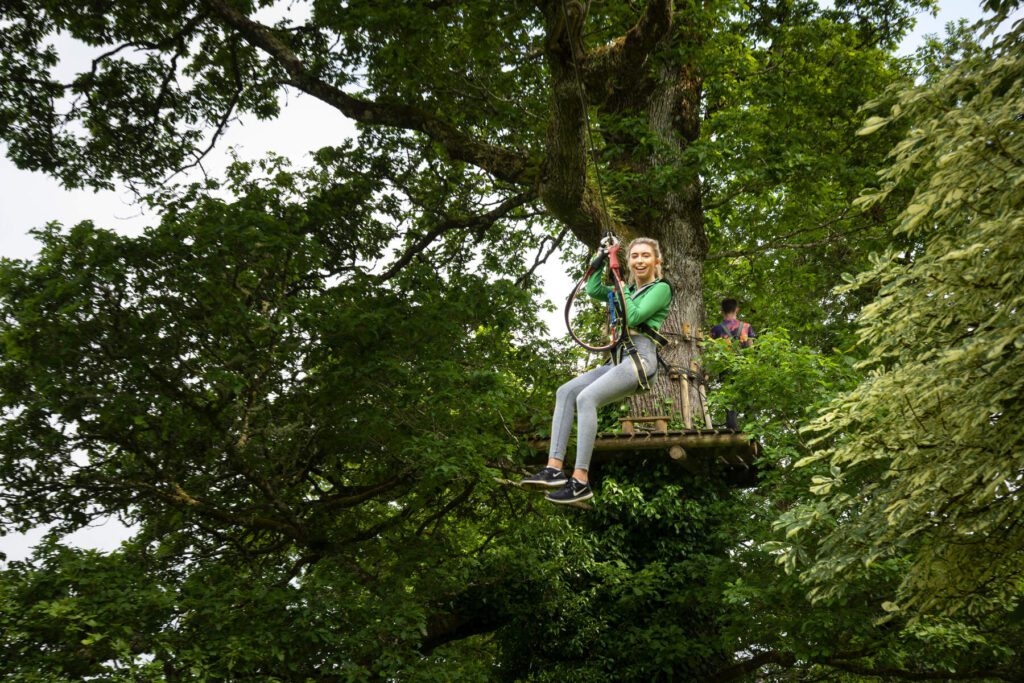
Arrive 15 minutes before your booked time. This gives you buffer for parking, finding the welcome area, and sorting yourself out before the briefing starts.
Parking: All locations have parking on site. Lough Key has a Coillte parking charge of €6 per vehicle, payable at the barrier. Farran Park has a Coillte parking charge of €5 per vehicle.
Finding the welcome area: Signposted from the car park. Staff will be expecting you.
Checking in: Give your name, confirm your booking, sign any required waivers online before arrival. The staff will let you know where to wait for the briefing.
The Safety Briefing
Every session starts with a safety briefing. This takes approximately 20 minutes. Pay attention; it matters.
A staff member explains:
The equipment:
- How harnesses work
- How the continuous belay system keeps you clipped in throughout
- What each piece of equipment does
The rules:
- How to move between sections
- What to do on platforms
- When to wait for others
- Hand signals and communication
What to expect:
- How high the courses go
- How long sections take
- What to do if you get stuck
After the briefing, everyone gets fitted with a harness. Staff check each one individually. The harness goes around your waist and legs, with attachment points for the safety system.
By the end of the briefing, the unknown has become known. Most nervous people feel better at this point.
How the Safety System Works
ZipIt uses a continuous belay system that keeps you continuously attached. This is worth understanding because it is the reason the courses are safe.
The basics:
- You wear a harness with two attachment points
- These connect to the safety line that runs through the entire course
- You cannot unclip from the safety line until you return to ground level
- Even if you fall, slip, or let go, you cannot fall to the ground
The system is designed so that human error cannot defeat it. You physically cannot unclip yourself mid-course. Nervous visitors find this reassuring once they understand it.
Staff check equipment before you start and monitor throughout. If anything seems wrong, they intervene.
On the Courses

This is the main event. Two to three hours of climbing, crossing, and ziplining through the forest.
How it works:
The courses are graded from beginner to advanced. You choose where to go. Nobody assigns you to a level. Start with easier sections to warm up, then progress to harder ones as confidence builds.
You move at your own pace. There is no timer. Nobody is watching and judging. If you want to take five minutes on a platform looking at the view, that is fine.
What the courses involve:
Rope bridges: Walking across ropes strung between platforms. Some are stable. Some wobble. Balance matters more than strength.
Cargo nets: Climbing across nets stretched between trees. Finding handholds and footholds. Slower than it looks.
Log crossings: Walking along logs suspended between platforms. Some are fixed. Some roll. Concentration required.
Ladders and climbs: Getting up to platforms, getting between levels. Some straightforward, some requiring effort.
Ziplines: The highlight for most people. Launching from a platform, flying through the trees, landing on the next platform. Speed varies by line.
How high?
Varies by section and course level. Beginner sections are lower. Advanced sections can be 15 metres (50 feet) or more above the forest floor. You choose what you attempt.
If You Get Nervous
Most people feel some nerves. Heights are inherently nerve-inducing. The body responds even when the mind knows you are safe.
What usually happens:
Before starting: Peak anxiety. Looking at the courses, imagining the worst. This is normal.
First section: The hardest part. Leaving the ground. The harness taking your weight for the first time.
After the first section: Relief. You did it. The fear was about the unknown. Now you know.
Middle of the session: Most nervous people are no longer nervous. They are focused, challenged, enjoying themselves.
By the end: The nervous ones often feel proudest. The gap between fear and achievement creates the strongest satisfaction.
What staff do:
- Watch for people who are struggling
- Offer encouragement without pressure
- Talk through sections step by step
- Give permission to take your time
- Never force anyone to continue
What you should know:
- Nerves are normal
- Most nervous people finish and feel great
- You can stop at any point without drama
- Nobody will judge you
If You Get Stuck
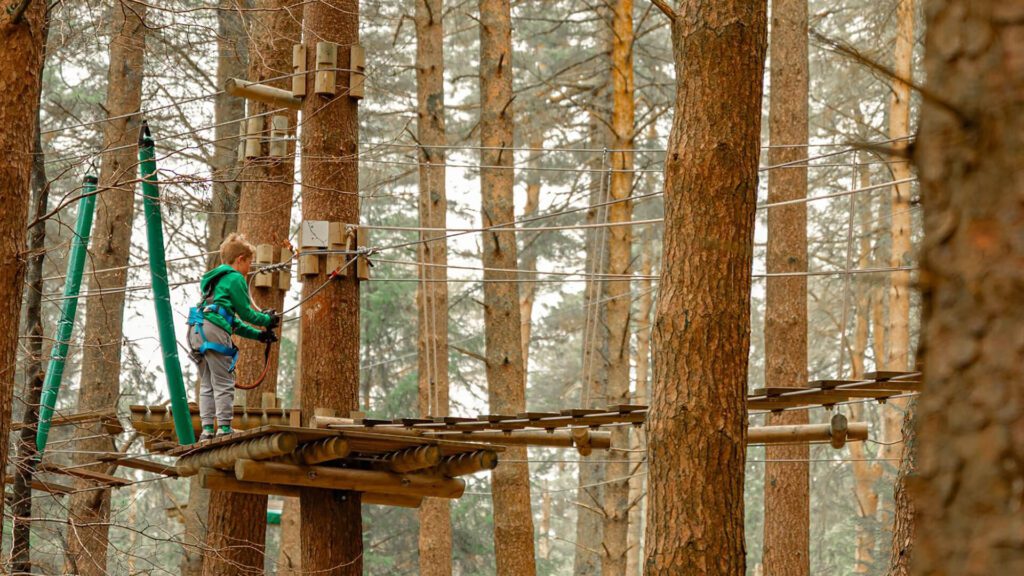
It happens. Someone freezes mid-crossing, unable to go forward or back. The brain locks up. The body will not move.
What to do:
- Stop. Breathe. You are safe. The harness will hold you.
- Look at the next platform, not the ground.
- Take as long as you need.
- If you cannot continue, call out or wave to staff.
What staff do:
- Come to help
- Talk you through it
- Help you complete the section or return to a platform
- Never make you feel bad about it
Getting stuck is not failure. It is a normal thing that happens to some people. The staff see it regularly and handle it calmly.
Weather
Sessions run in most weather.
Rain: The courses operate in rain. You will get wet. Waterproof jackets help but are not essential. The courses are designed for outdoor use year-round.
Wind: Light to moderate wind is fine. High winds may cause sessions to pause. This is rare.
Electrical storms: Sessions pause for extreme weather warnings. Safety first.
Cold: Dress warmly in winter. You warm up once moving but can cool down between sections.
Heat: Dress in layers. Bring water. The forest provides shade but summer sessions can be warm.
After the Session
Equipment comes off. You return to the welcome area.
Most people are:
- Tired (three hours of physical activity)
- Hungry (climbing burns energy)
- Buzzing (adrenaline and achievement)
- Talkative (stories need telling)
Allow time for this. Do not schedule something immediately afterwards. Let the experience settle.
Food: Most locations do not have cafés on site. Lough Key has a café in the visitor centre (five-minute walk). Plan to eat elsewhere or bring snacks.
Frequently Asked Questions
Many people are. Most manage fine once they start. The safety system helps psychologically because you know you cannot fall. Start with lower sections and progress gradually.
Fitness matters less than people expect. The courses require balance and nerve more than strength. You move at your own pace. Rest when you need to.
You can book as an individual and join others at your session time. Groups, couples, families, and solo visitors all participate.
The activity itself runs approximately three hours. Add 20 minutes for briefing, 15 minutes for equipment removal. Allow 3.5 to 4 hours total.
Phones cannot be taken on the courses (they fall from pockets). Photos from ground level are possible if someone in your group stays below. Staff do not take photos during sessions.
Seven years old for standard courses. Three years old for junior courses at Djouce Park.
Check the pricing page for current rates. Varies by location and booking type.
Book Your First Visit
Ready to try it? Book online and choose your preferred location and date. Arrive prepared, pay attention to the briefing, and enjoy three hours in the trees.