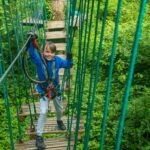
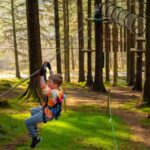
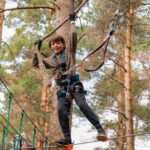
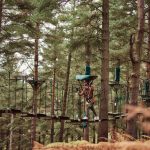
ZipIt offers school tours at four forest locations across Ireland: Dublin, Cork, Wicklow, and Roscommon. Sessions run approximately three hours for groups of 20 to 200+ students, with all equipment, safety briefings, and supervision included. This guide covers everything teachers need to plan, book, and run a successful trip.
School tours take work.
The booking. The risk assessment. The permission slips. The letters home. The bus quotes. The headcount on the day. The child who forgot their lunch. The child who gets sick on the bus. The parent who complains afterwards.
Outdoor adventure adds another layer. Equipment, safety briefings, and physical challenge. More to explain to parents. More to include in risk assessments. More variables on the day.
This guide covers the full process, from initial planning through to follow-up activities back in the classroom. Written for teachers who want the tour to run smoothly and the paperwork to be straightforward.
Why Schools Choose Outdoor Adventure
School tours serve different purposes. Educational extension. Social bonding. Reward for a term’s work. Break from routine.
Outdoor adventure activities deliver on several of these simultaneously.
Physical challenge. Students do something genuinely difficult. Not dangerous, but demanding. This is increasingly rare in risk-averse school environments.
Social development. Students help each other. They encourage nervous classmates. They work through challenges together. The dynamics are different from classroom group work.
Confidence building. Students who struggle academically often excel physically. A child who never answers questions in class might be completely calm forty feet up. These moments matter.
Memorable experience. Students remember outdoor adventure tours years later. The specific crossings, the specific moments, the specific fears overcome. This sticks in ways that museum visits do not.
Curriculum links. Connections to PE, SPHE, geography, science, and environmental education. More on this below.
Choosing a Location

ZipIt operates at four sites. The right choice depends on your school’s location and the age of students.
Tibradden Wood, Dublin
The Tibradden Wood is thirty minutes from Dublin city centre. In the Dublin Mountains, with views across the city on clear days. Most accessible for Dublin schools and those in the surrounding counties.
Good for: Dublin schools, Leinster schools wanting to minimise travel time, and schools combining with Dublin Mountains Educational Centre.
Farran Park, Cork
Twenty minutes from Cork city. Lee Valley woodland with a deer enclosure on site. Most accessible for Munster schools.
Good for: Cork schools, schools in Kerry, Limerick, Waterford, or Clare, wanting a reasonable journey.
Djouce Park, Wicklow
Near the Wicklow Mountains. The only location with junior courses for younger children (ages 3+). Good connection to mountain walking trails.
Good for: Schools with younger classes, schools wanting to combine with hill walking, schools in Wicklow or south Dublin.
Lough Key, Roscommon
The western option. Within Lough Key Forest Park, with additional activities available. About two hours from Dublin, ninety minutes from Galway.
Good for: Schools in Connacht, Midlands schools, and schools wanting a full day combining multiple activities.
Booking Process
Step 1: Initial enquiry. Contact the schools team with your preferred date, location, estimated numbers, and age range. Popular dates book quickly, especially May and June.
Step 2: Quote and confirmation. You will receive pricing based on your group size. Confirm the booking with a deposit when ready.
Step 3: Final numbers. Confirm exact student numbers closer to the date. Small changes are usually manageable. Significant changes may affect pricing or logistics.
Step 4: Pre-visit (optional). For larger groups or teachers who have not visited before, a pre-visit can help with risk assessment and logistics planning.
Booking tips:
- Book as early as possible for May and June dates
- Tuesdays, Wednesdays, and Thursdays tend to have better availability than Mondays and Fridays
- Avoid end-of-term dates when everyone else is booking
- Confirm numbers as accurately as possible to avoid last-minute complications

What you need to assess:
- Travel to and from the venue
- Supervision ratios for your school’s requirements
- Students with specific medical conditions or needs
- Behaviour management procedures
- Emergency contact procedures
- Wet weather contingencies (though sessions run in rain)
Key safety points to note:
- Staff are ERCA trained and qualified
- Equipment is regularly inspected
- Sessions only pause for extreme weather warnings
Most schools find the risk assessment straightforward once they have the documentation from ZipIt.
Communication with Parents
Parents need clear information. A letter home should cover:
What the trip involves. High ropes courses in a forest setting. Physical challenge at height. Safety equipment provided.
Date, time, and transport. Departure and return times. Mode of transport. Drop-off and pickup arrangements if different from normal.
What to wear. Outdoor clothes. Layers. Closed-toe shoes with grip. No sandals, no fashionable shoes. Emphasise this twice.
What to bring. Packed lunch if not provided. Water bottle. Waterproof jacket if rain forecast. No valuables.
What not to bring. Phones are usually discouraged on school tours, and cannot be taken on the courses anyway.
Cost. Total cost and payment deadline.
Permission slip. Standard parental consent plus any additional consent your school requires for adventure activities.
Medical information request. Ask parents to confirm any conditions that might affect participation. Minimum height requirements apply. Certain medical conditions may restrict participation.
Preparing Students
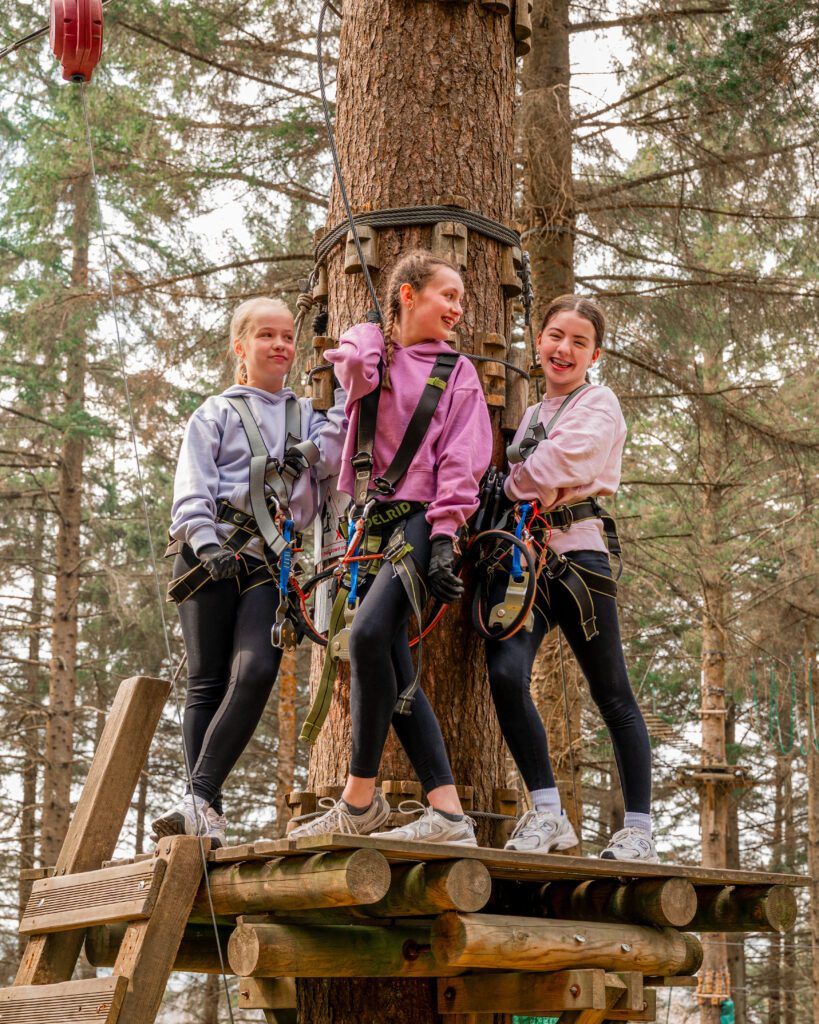
A few minutes of preparation in class makes the day run more smoothly.
Explain the activity. Show photos or videos if available. Explain what high ropes courses involve. Address common fears.
Set expectations. It is okay to be nervous. It is okay to find some sections difficult. It is not okay to make fun of classmates who are struggling.
Discuss teamwork. Students will help each other. They will wait for classmates. They will encourage each other across difficult sections.
Cover practical details. What to wear. What to bring. What time to arrive at school?
Identify concerns. Talk privately with students who are particularly anxious. Reassure them that they can attempt courses at their own pace and that staff are trained to help nervous participants.
On the Day
Before departure:
- Final headcount
- Check appropriate clothing and footwear
- Confirm packed lunches and water
- Distribute any medication to supervising adults
- Brief parent helpers if attending
At the venue:
- Arrive on time (late arrivals delay the whole group)
- Gather students at the welcome area
- Safety briefing conducted by ZipIt staff (approximately 20 minutes)
- Equipment fitted to all participants
- Onto the courses
During the activity:
- Teachers and helpers support from the ground level
- Watch for students who are struggling or anxious
- Help with encouragement, but let staff handle safety
Lunch:
- Most schools do lunch after the activity
- Picnic areas available at most locations
- Keep it simple; students will be hungry
Departure:
- Final headcount
- Gather all belongings
- Thank the staff
- Head to transport
Supervision Ratios
Your school will have policies on supervision ratios for school tours. ZipIt provides:
- Safety briefings and equipment management
- First aid capability on site
Schools typically provide:
- Teachers and teaching assistants
- Enough adults to manage the group during travel and breaks
Discuss ratios with the school’s team when booking to confirm what is required from your side.
Students with Additional Needs
High ropes courses can accommodate many students with additional needs, but planning helps.
Physical considerations:
- Minimum height requirements apply
- Certain medical conditions affect participation (heart conditions, pregnancy, conditions affected by magnetic fields near the belay system)
- Weight limits apply for safety
- Mobility requirements vary by course section
Sensory considerations:
- The environment is relatively quiet (forest setting, no loud machinery)
- Harness fitting involves physical contact
- Heights may overwhelm some students
Anxiety and behavioural considerations:
- Nervous students usually manage well with support
- Staff are experienced with anxious participants
- Forcing reluctant students is never required
- Ground-level observation is always possible for students who cannot participate
Discuss specific student needs with the school’s team when booking. Adjustments are often possible.
Curriculum Links
Outdoor adventure connects to multiple areas of the curriculum.
Physical Education:
- Balance, coordination, agility
- Physical challenge and personal limits
- Outdoor and adventure activities (strand in primary PE curriculum)
SPHE:
- Self-confidence and self-esteem
- Managing feelings, especially fear and anxiety
- Cooperation and teamwork
- Personal safety awareness
Geography:
- Forest environments and ecosystems
- Land use and conservation
- Map reading and navigation (can be added)
Science:
- Trees and woodland ecology
- Forces, balance, and gravity
- Materials and equipment design
Environmental Education:
- Woodland habitats
- Native species
- Sustainable land management (Coillte forests)
Follow-up activities in class can extend the learning. Reflective writing, geography projects, science investigations about forces and balance, artwork inspired by the forest environment.
Wet Weather
Sessions run in rain. This is Ireland.
What to do:
- Check the forecast and advise appropriate clothing
- Bring spare socks if you have space
- Waterproof jackets are strongly recommended
- Sessions only pause for extreme weather warnings
What not to do:
- Cancel because rain is forecast
- Promise students a dry day
- Forget to mention wet weather to parents
Frequently Asked Questions
Groups from 20 to 200+ students. Very large groups may split across time slots. Contact the school’s team to discuss logistics for large numbers.
Standard courses require students to be 7 or older. Djouce Park has junior courses for younger children from age 3.
As early as possible, especially for May and June. Popular dates fill quickly.
Yes. Teachers and helpers can do the courses alongside students if they wish. This often helps with encouraging nervous students.
They can observe from ground level. Staff never force participation. It happens occasionally and is handled without drama.
Yes, all locations can accommodate coaches. Confirm parking arrangements when booking.
Book a School Tour
ZipIt offers school tours at four locations across Ireland. Sessions run approximately three hours with all equipment and supervision included.
Book online or contact the school’s team to discuss dates and requirements.