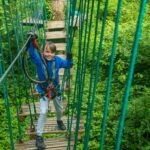
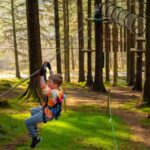
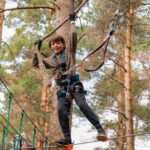
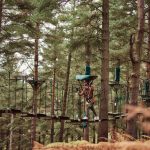
ZipIt offers outdoor adventure parties at four forest locations across Ireland. Teenagers spend two to three hours on high ropes and zipline courses, with circuits graded from beginner to advanced. The format works for ages who have outgrown soft play but are not yet ready for adult activities.
Thirteen. Fourteen. Fifteen.
The birthday party problem changes. Soft play is embarrassing. Bowling feels babyish. Cinema means sitting in silence, which defeats the purpose of gathering friends together. Gaming parties work for some, but three hours of screens hardly counts as a celebration.
What teenagers want is harder to pin down. Something that feels grown up. Something they can post about. Something that does not make them look like they are still having the same parties they had at eight.
The options narrow just as the opinions get stronger.
Why Outdoor Adventure Works for Teens
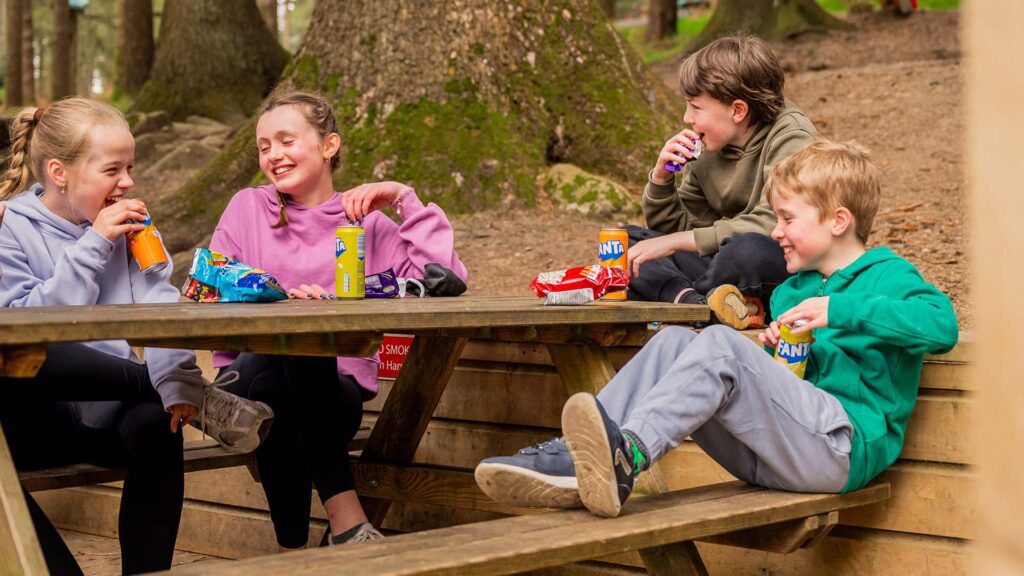
Teenagers occupy an awkward middle ground. Not children, not adults, suspicious of anything that feels like it belongs to either category.
High ropes courses sit in useful territory. The activity is genuinely challenging. Adults do it. There is real height, real adrenaline, real accomplishment. It does not feel like a children’s party with a different label.
At the same time, the format works for groups. Everyone participates at their own pace. Nobody is singled out. The self-conscious can push themselves quietly. The confident can show off if they want. Both approaches work.
And it photographs well. Teenagers care about this. A photo forty feet up in the trees looks more impressive than a photo in a bowling alley. The stories write themselves.
What Teenagers Actually Do
The format is the same as for younger children, but teenagers use it differently.
The safety briefing takes twenty minutes. Equipment fitted, rules explained. Teenagers tend to pay attention because they understand the stakes better than younger kids.
Then onto the courses. Tibradden Wood and the other ZipIt locations have circuits graded from beginner to advanced. Teenagers almost always want the harder routes. They push each other. They compete informally. They help friends who get stuck, often with commentary that adults might find inappropriate but teenagers find hilarious.
Two to three hours pass quickly. Most teenage groups could stay longer if allowed. The activity holds attention in a way that few things do for this age group.
Parents and teachers can supervise from ground level, while giving them space to explore. The balance is right. Enough oversight for safety. Enough freedom for independence.
The Social Dynamics

Teenage parties have social complexity that children’s parties lack.
Friendships are fragile. Status matters. The wrong activity exposes the wrong people. Too competitive, and someone feels humiliated. Too childish, and everyone feels embarrassed. Too passive, and the energy drains away.
High ropes courses navigate these dynamics reasonably well.
- No direct competition. Nobody wins or loses. The quiet ones are not forced to perform. The confident ones cannot dominate at others’ expense.
- Self-paced participation. Everyone does the same activity, but at their own level. The sporty one attempting the hardest crossing and the nervous one sticking to easier sections both count as full participation.
- Natural conversation opportunities. Waiting at platforms, walking between sections, and recovering at ground level. The format creates spaces for talking without forcing it.
- Shared experience without forced intimacy. Teenagers do not want icebreakers or facilitated bonding. They want to do something together and let relationships develop naturally. This format allows that.
What Teenagers Say Afterwards
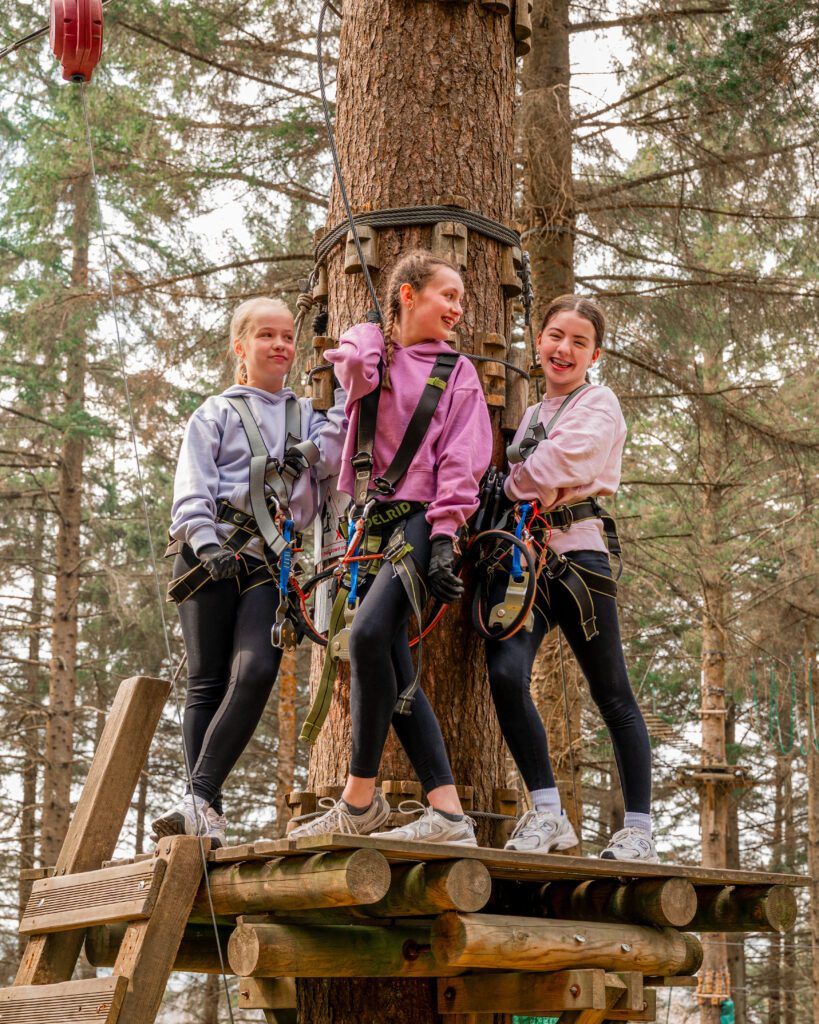
Feedback from teenage parties tends to focus on specific moments rather than the overall experience.
The crossing looked impossible. The friend who froze and then made it. The zipline went faster than expected. The view from the highest platform.
These become stories. They get retold at school. They appear in group chats. They give the party a longer life than most alternatives.
For the birthday teenager, being the one who organised something genuinely good carries social value. It was their idea. Their party. Their friends had a good time because of them.
Practical Considerations for Parents
Teenagers are easier than younger children in some ways, harder in others.
- Supervision. All those under 18 years old require supervision by adults, either taking part or from the ground.
- Phones. Decide on a phone policy. Phones cannot be taken on the courses anyway (they fall out of pockets). Whether teenagers have them before and after is up to you.
- Food. Teenage appetites after three hours of physical activity are significant. Plan food accordingly. More is better than less.
- Numbers. Larger groups often work better for teenagers. The social dynamics spread more evenly. Smaller groups can feel intense.
Comparing Teenage Party Options
How does outdoor adventure compare to the alternatives?
- Bowling. Safe, predictable, slightly boring. Works as a backup but rarely excites anyone over twelve.
- Cinema. Passive. Two hours of silence followed by an awkward conversation about what you just watched. Limited social value.
- Escape rooms. Good for some groups. Requires teamwork and problem-solving, which not all friend groups handle well. Can create conflict. Limited to smaller numbers.
- Gaming parties. Works for gaming-focused groups. Others feel excluded. Parents are sometimes uncomfortable with hours of screen time as a celebration.
- Paintball or laser tag. Competitive. Some teenagers love it. Others feel humiliated if they are not good at it. Can reinforce rather than bridge social divisions.
- Trampoline parks. Fun but increasingly associated with younger children. Some teenagers find it embarrassing.
- Outdoor adventure. Active, memorable, photographs well, works for mixed groups, and does not require specific skills. Main limitations are weather dependency and age requirements.
The Zip Trail Option
For teenagers who want maximum adrenaline, the Zip Trail at Tibradden offers 500 metres of ziplines across twelve platforms.
Less climbing, more flying. The lines run through the forest canopy at speed. For teenagers who have done ropes courses before or who specifically want ziplines, this delivers.
Some parties combine both. Main courses first, then the Zip Trail as a finale. The booking team can advise on timing and logistics.
Weather and Timing
Teenage parties run in most weather. Rain does not stop the activity. Waterproof jackets sensible if the forecast looks damp.
Timing considerations:
- Weekends. Most popular. Book early for preferred dates.
- School holidays. Busy periods. Book well in advance.
- Weekday evenings. Possible during longer summer days. Can work for smaller groups.
- Winter. The parks operate year-round. Shorter days limit timing options. Dress warmly.
What to Communicate to Guests
Send details to invited guests at least a week before:
- Location and transport. Where exactly to go. How to get there. Whether lifts are available or everyone makes their own way.
- What to wear. Outdoor clothes. Layers. Closed-toe shoes with grip. No sandals, no fashion trainers with smooth soles. Teenagers need this emphasised. Fashion choices sometimes override practical sense.
- Timing. When to arrive. When the activity ends. Pickup arrangements.
- Phones and valuables. These cannot go on the courses.
- Food plans. What happens after? Where and when.
Frequently Asked Questions
The courses work for anyone aged 7 and up, with no upper limit. Teenagers typically do well because they have the height, strength, and nerve to attempt harder sections.
Yes, all children under 18 years old require supervision. So parents or teachers are required to stay and supervise.
It happens. The courses have easier sections for nervous participants. Staff are trained to help without embarrassing anyone. Most nervous teenagers finish the course.
All groups are welcome. Very large groups may split across time slots.
Teenagers who have done it tend to rate it highly. The activity is genuinely challenging. It does not feel like a children’s party. The photos look impressive.
Book a Teenage Birthday Party
ZipIt offers birthday parties at four forest locations across Ireland. Teenagers spend two to three hours on high ropes and ziplines, with circuits that challenge even the confident ones.
Book online or contact the team to check availability.